Ibu Maisaroh
IBU MAISAROH, SARONG RELAWATI LUNG LUNGAN
IBU MAISAROH, SARONG RELAWATI LUNG LUNGAN
Couldn't load pickup availability
Ibu Maisaroh
Born 1985, Batang, Indonesia
SARONG RELAWATI LUNG-LUNGAN (2025)
100% cotton, synthetic dyes
Hand-drawn wax resist on machine-woven cotton
216 × 114 cm
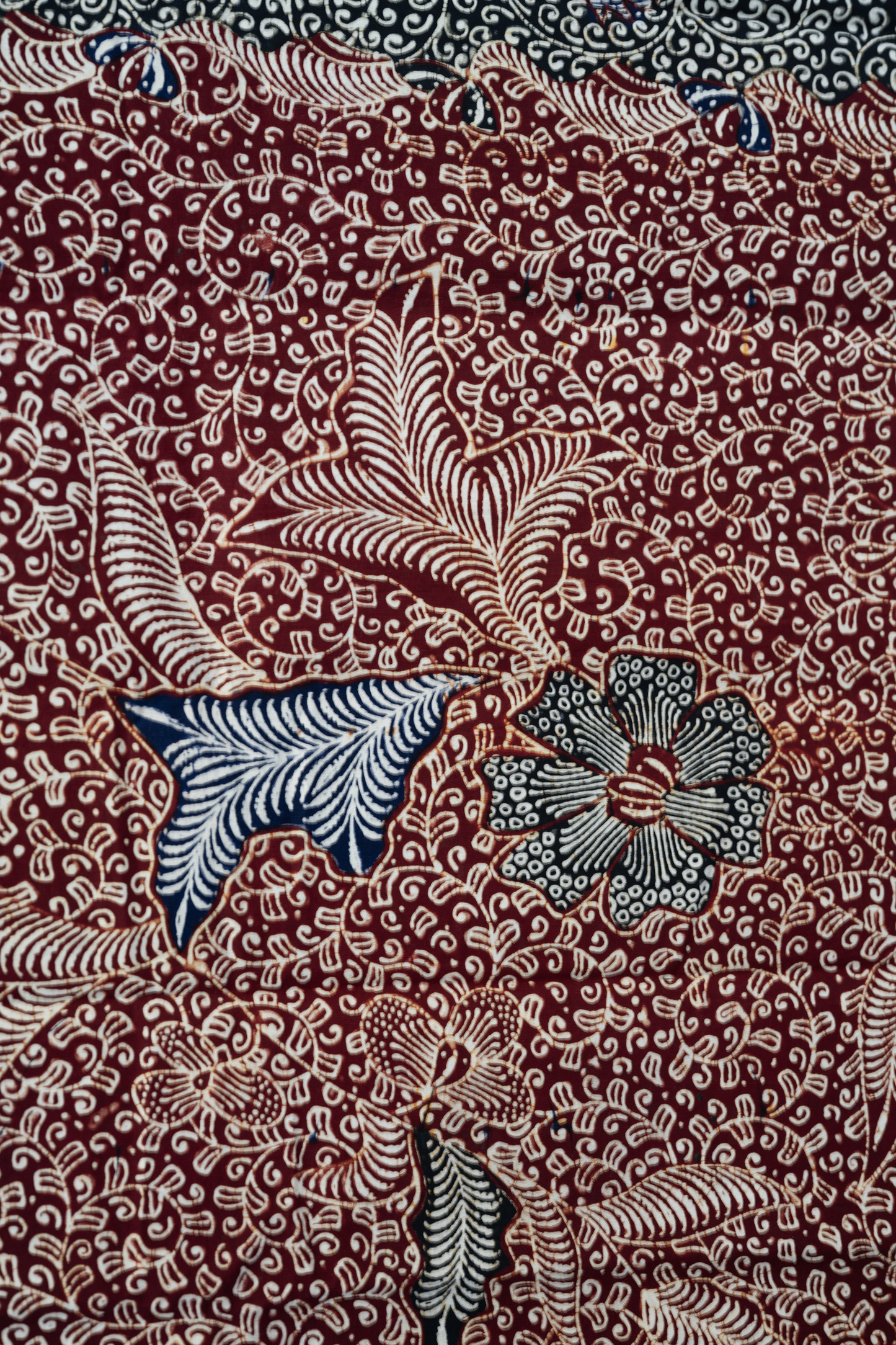
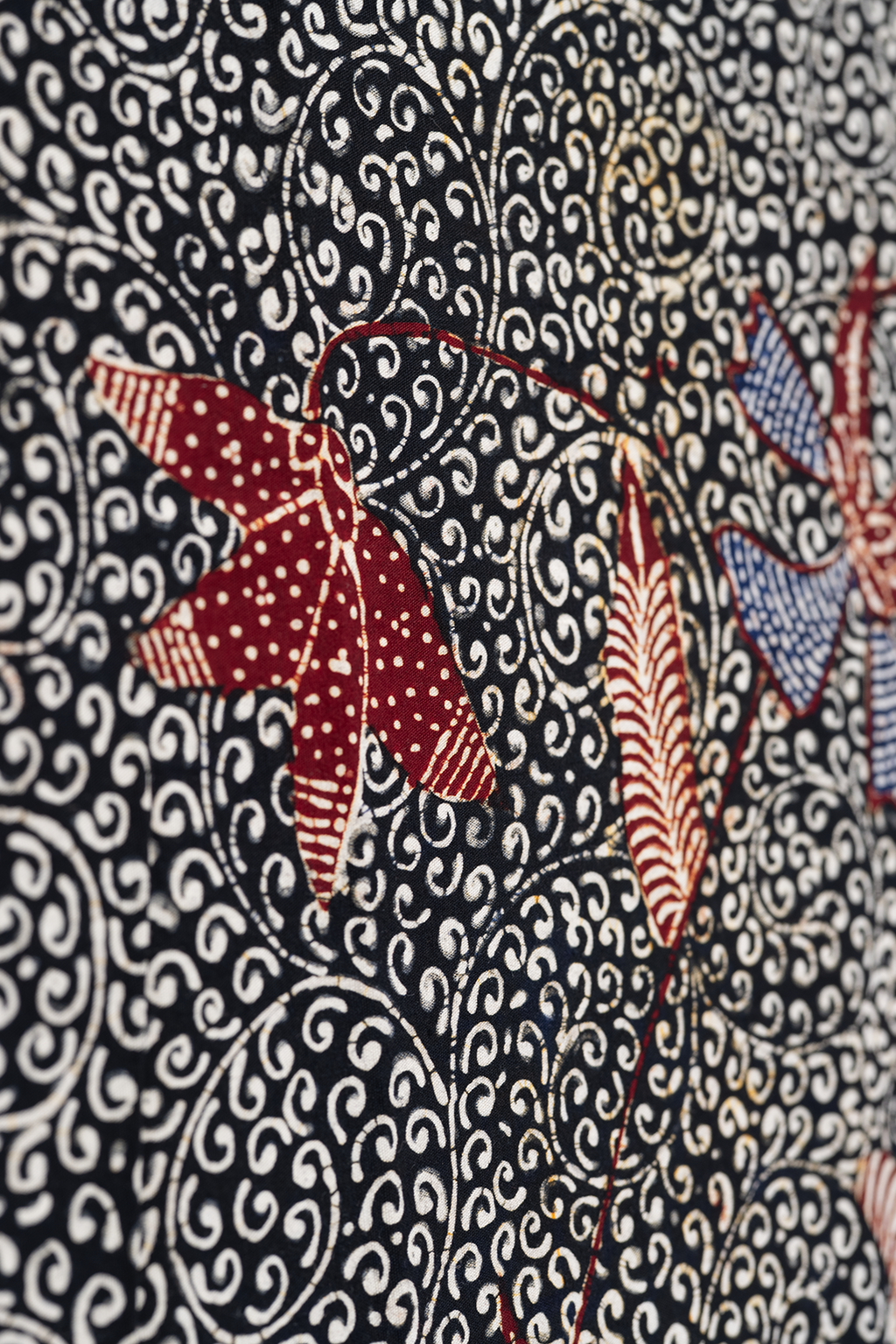
An Escher-like dance of vines, this sarong invites contemplation of the infinite and the interlinked nature of our world.
This sarong is a mesmerising work and a testament to Ibu Maisaroh’s technical mastery and gift for geometric detailing.
What sets this piece apart is the fill. The badan (body of the cloth) is worked in lung-lungan, a motif of intertwining vines and tendrils whose name comes from lung, the Javanese word for vine tendril. But Ibu Maisaroh’s interpretation is anything but literal. The vines are rendered with a geometric precision and interlocking rigour that elevates the motif into something approaching the abstract — less a garden, more a meditation on form itself. There is an Escher-like quality to the patterning: the eye follows one line and finds it has become another. This geometric sophistication is deeply rooted in the broader tradition of Islamic art, in which the infinite repetition and interlocking of pattern becomes a visual contemplation of the divine. The lung-lungan motif carries its own symbolism: lung-lungan literally means intertwining, and speaks to the interdependence of all living things, the hope for a flourishing social life, and the resilience and adaptability that comes from remaining connected. It is also said to confer protection on its wearer.
The kepala (feature panel) — displayed at the back when worn by men, and at the front by women — is anchored by the floral and distinctly feminine Relawati design. Relawati is a woman's name rooted in the Javanese word rela (willing, open-hearted, generous of spirit) and carries the meaning of a woman who gives of herself with grace and sincerity. It is a prayer that the one who wears this cloth will embody deep compassion and joyful generosity.
Subtle hints of creatures are woven through the plant forms… a curved leaf, or the arc of a plume? A petal, or the sweep of a wing? The viewer must use her imagination. This practice of samaran (abstraction or camouflage) stems from the Sufi Islamic teaching at the heart of Rifa’iyah batik: that it is unwise to depict a whole living creature unless one is also able to grant it a soul.
The outer border is finished with a beautifully executed wave-like design —suggestive of udang samaran, the abstracted shrimp rendered in the samaran style as curving, undulating forms. In Javanese philosophical tradition, the shrimp carries layered meaning: its characteristic backward movement is understood as a form of wisdom — the willingness to be humble, step back, to reflect, and to regroup before moving forward with greater clarity. The shrimp’s capacity to thrive across diverse aquatic environments speaks to adaptability and resilience. And the Javanese proverb ana udang ing sakwaliké watu (there is a shrimp behind the stone’ — serves as a reminder to look beyond surfaces, to remain thoughtful and discerning in the face of hidden intentions.
In terracotta, black and blues, the colour scheme is subdued and sophisticated.
Ibu Maisaroh
Ibu Maisaroh learned batik tulis from her mother, Ibu Juriyah — herself a celebrated Rifa’iyah artist — and mastered the artform by the age of fifteen. Batik is her consuming passion: she dedicates the greater part of her life to her practice. Her works consistently push beyond the expected, offering something at the next level of intricacy, inventiveness and spiritual depth. For this reason, they are highly sought after.