Ibu Juriyah
LEK JURIYAH, JARIK TAMBAL TIGA NEGERI
LEK JURIYAH, JARIK TAMBAL TIGA NEGERI
Couldn't load pickup availability
Ibu Juriyah
Born Batang, Indonesia
JARIK TAMBAL TIGA NEGERI (2010)
100% Cotton, synthetic dyes
Hand-drawn wax resist on machine-woven cotton
250 x 110cm
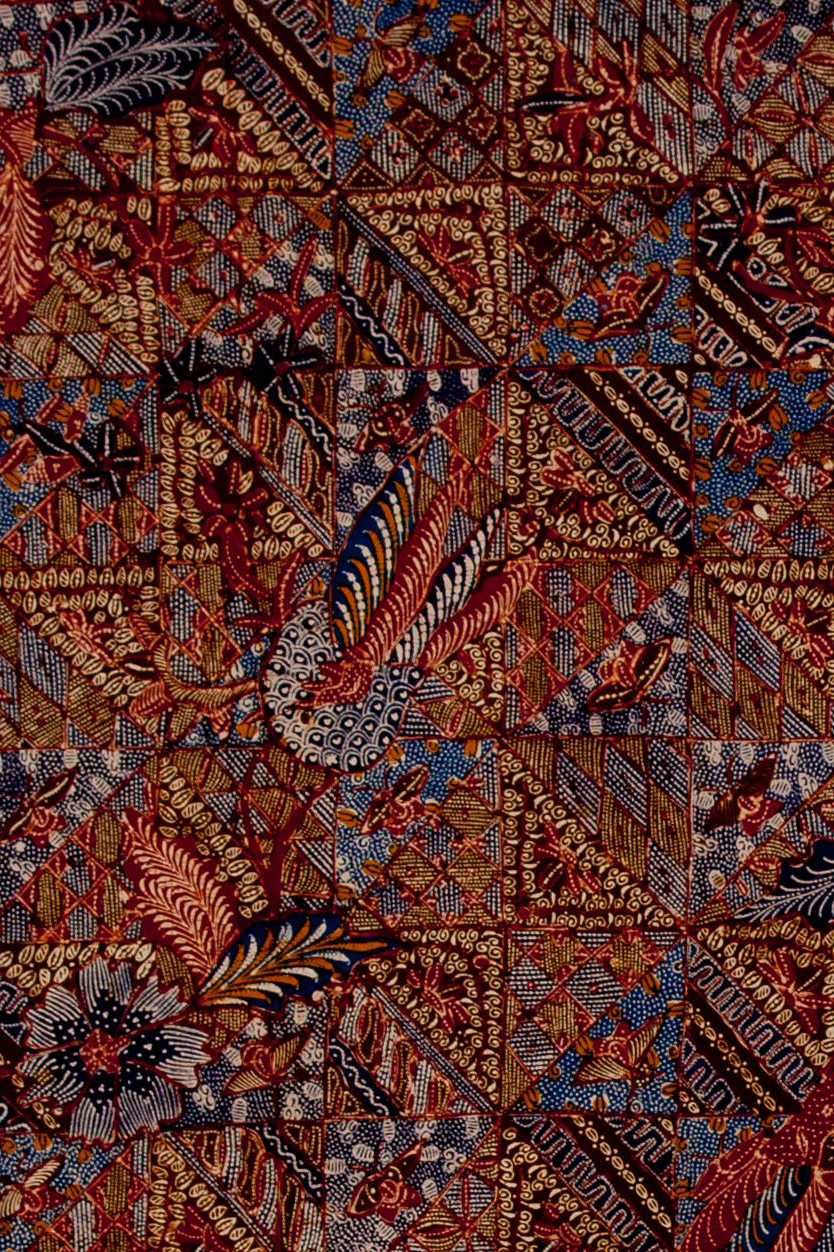
Rich in flora and fauna-like detailing, this extraordinary tambal tiga negeri jarik is a dazzling patchwork symbolising healing and togetherness.
This lavish jarik cloth is coloured in the tiga negeri (three nations) style with its three principal colours of red, blue and brown historically sourced from three different regions of Java: red from Lasem on the north coast, blue from Pekalongan, and warm sogan brown from Solo. To achieve this, Lek Juriyah applied intricate wax motifs to the entire cloth three times over, a painstaking process that occupied her for around six months.
The cloth combines a rich variety of motifs through the tambal (patchwork) structure where each geometric compartment is filled with a different pattern, creating a quilt-like composition of extraordinary visual complexity. The tambal design is associated with healing and repair: fixing what is broken, whether physical or spiritual, to build something stronger and more beautiful. Some believe that tambal batik carries genuine healing power, and that wearing it can aid recovery from illness or suffering.
Throughout the foreground, flowers, abstracted birds and butterflies speak of vitality, abundance and the regenerative power of the natural world. The creatures are never depicted whole because Lek Juriyah practises samaran (abstraction or camouflage), respecting the Sufi Islamic belief that it is unwise to depict a living creature in its entirety unless one is also able to grant it a soul.
Ibu Juriyah
Growing up in Batang, Ibu Juriyah has practiced batik since she was a young girl, when she learned the traditional techniques from her mother and older sisters. Today Lek Juriyah is an accomplished batik producer, proud mother of twelve and grandmother of many. She has passed on her batik skills to her children, including the celebrated Rifa’iyah artist, Ibu Maisaroh, also featured in this collection.