Ibu Nur Wakhidah
IBU NUR WAKHIDAH, JARIK PAGI SORE KAWUNG JENGGOT PELO ATI
IBU NUR WAKHIDAH, JARIK PAGI SORE KAWUNG JENGGOT PELO ATI
Couldn't load pickup availability
Ibu Nur Wakhidah
Born 2001, Batang, Indonesia
JARIK PAGI SORE KAWUNG JENGGOT PELO ATI (2025)
100% Cotton, synthetic dyes
Hand-drawn wax resist on machine-woven cotton
244*100cm
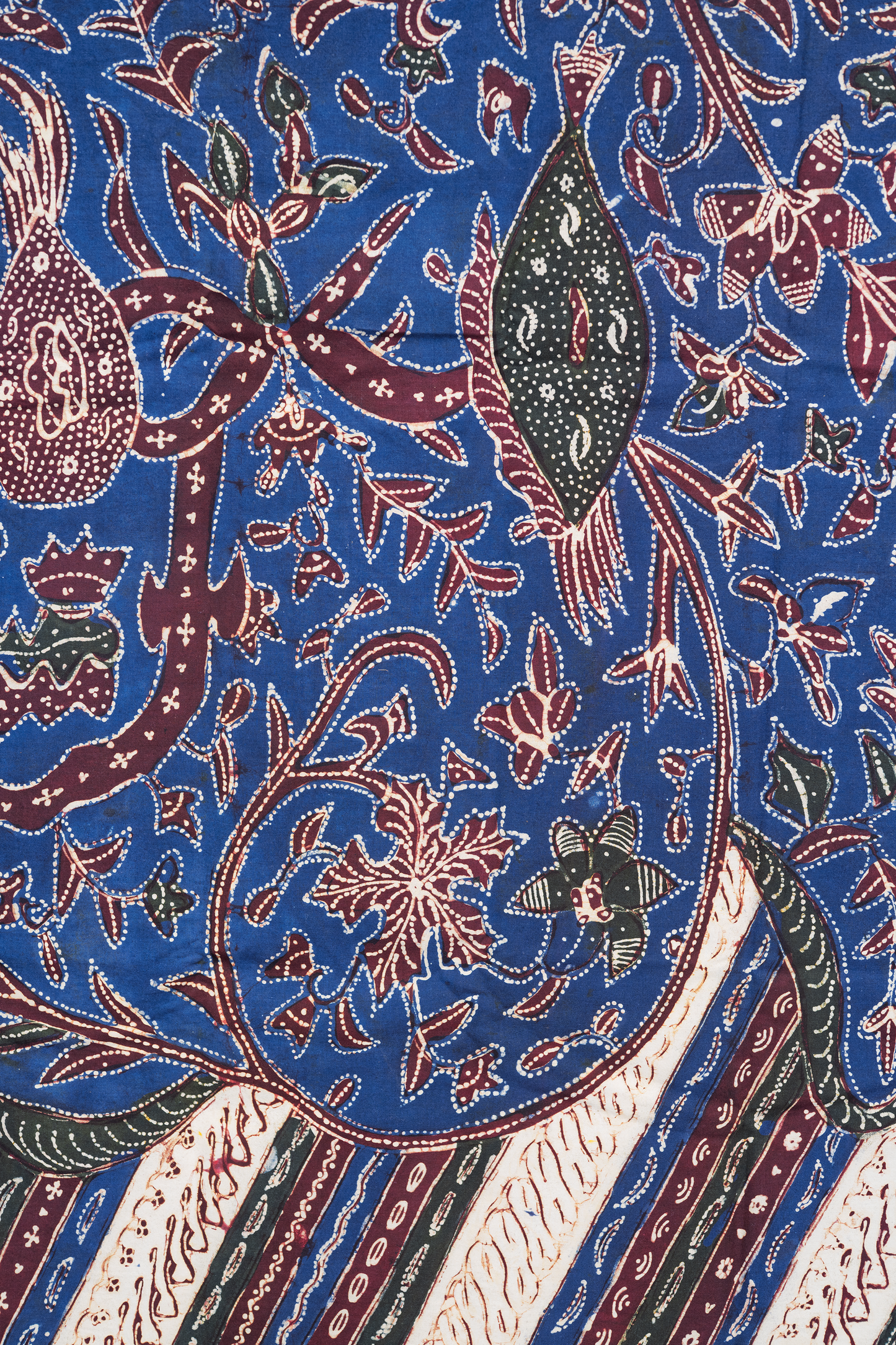
Vibrant with detail, this jarik cloth is a story book for those interested in uncovering its mysteries.
This long jarik cloth is worked in the pagi-sore format — literally 'morning-evening' — a style that, depending on how it is wrapped, presents one design for daytime and another for evening wear.
The left side of the cloth features pelo ati — a distinctly Rifa'iyah motif that takes its name from two Javanese words: pelo (gizzard), representing base instincts and impurities to be shed, and ati (heart), understood in Sufi thought as the locus of sincerity and spiritual purification. The motif depicts bird-like forms resembling roosters intertwined with stylised plant tendrils — abstracted in the samaran tradition — with the ati visible within the torso of each figure. Together, pelo and ati speak to the duality of human nature: the call to cultivate virtues such as patience, kindness and sincerity, while shedding envy, vanity and greed. The motif is framed above and below by udan liris — delicate diagonal lines evoking soft, steady rainfall — a symbol of fertility, growth and divine blessing descending from above. The rounded framing, including soft daun lancuran (rooster plumage/pandan) leaves, creates a womb-like space, suggestive of feminine creativity and the divine.
The right side of the cloth features the kawung jenggot motif. Kawung is among the oldest and most philosophically resonant of all Javanese batik motifs — its interlocking ovals, derived from the cross-section of the sugar palm fruit, appear in the stone reliefs of Hindu-Buddhist temples and were historically among the larangan: forbidden patterns reserved for the royal courts. The motif carries layered meanings — the four elements, the origins of life, the cyclical nature of existence. Jenggot (beard) refers to the whisker-like lines that fill the kawung.
The colour palette is distinctly Mbak Wakhidah's own: a predominance of blue tones that set this piece apart from the reds and earthy hues more typical of the Rifa'iyah tradition.
The two kepala (head sections) are deliberately distinct. One features the tumpal design — upward-pointing triangles symbolising creation, cosmic order and the sacred mountain peaks where earthly and spiritual realms converge. The other displays the gigi walang ('grasshopper teeth') design set against tambal (patchwork). Grasshopper teeth design represents humility and the importance not to under-estimate: the grasshopper, with its astounding teeth, are small yet mighty. The papan panels separating badan from kepala are animated by vines of orchid-like flowers, some of which take on the form of moths or insects — creatures half-glimpsed in the samaran tradition. Border motifs include ombak (waves) and trailing flower vines.
Ibu Nur Wakhidah (Mbak Wakhidah)
Mbak Wakhidah is one of the youngest active practitioners of batik Rifa’iyah in her community. She learned from the age of ten, guided by her mother and older sister, with whom she continues to work. She is drawn to the creative variety of batik tulis, and favours less common blue and violet colour combinations, in addition to the vibrant reds, greens and rich earthy tones more characteristic of the Rifa’iyah tradition.