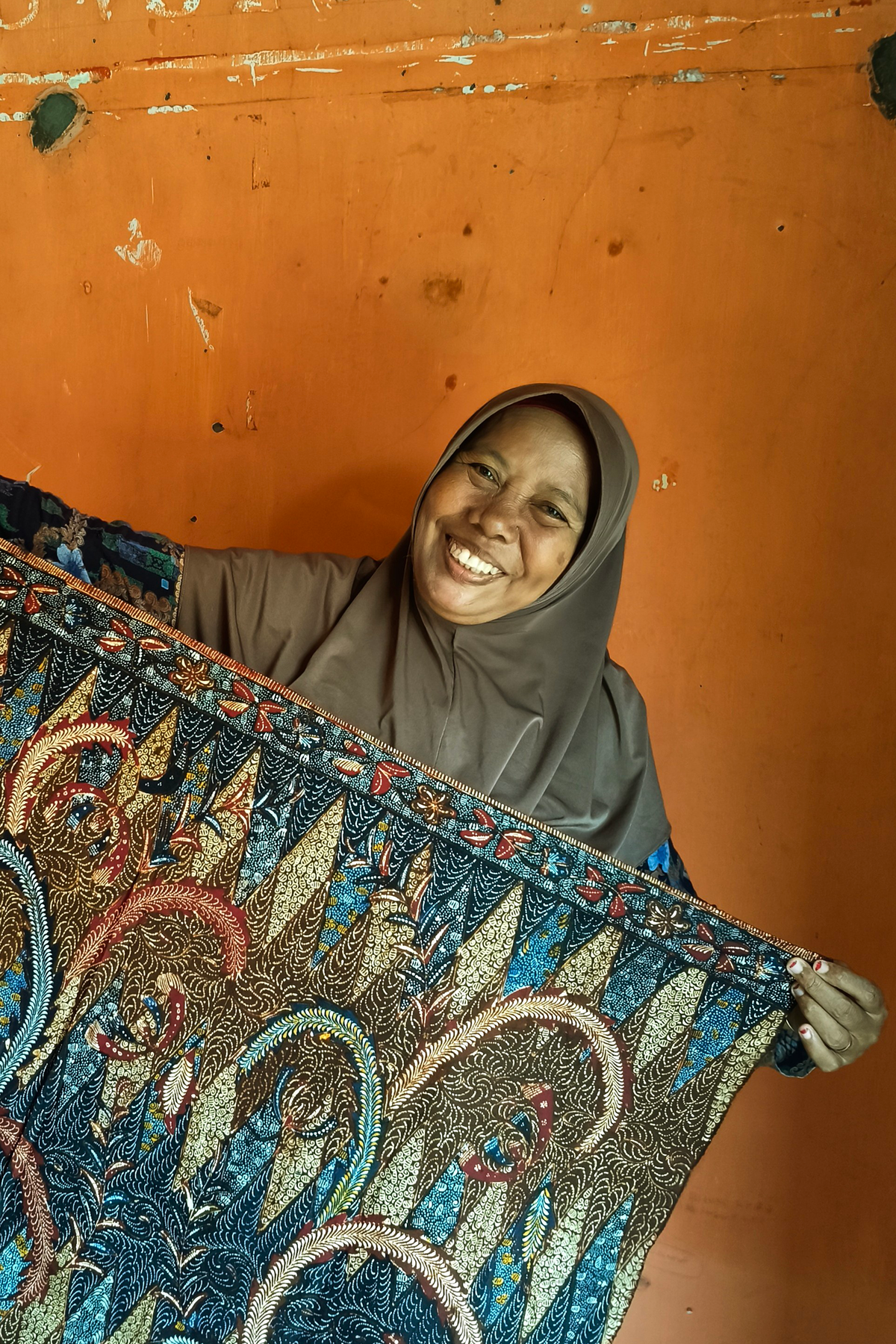
Ibu Nasiatun
IBU NASIATUN, SARONG GEMBLONG SAIRIS
IBU NASIATUN, SARONG GEMBLONG SAIRIS
Couldn't load pickup availability
Ibu Nasiatun
Born 1970, Batang, Indonesia
SARONG GEMBLONG SAIRIS TIGA NEGERI DENGAN LANCURAN DAN SOROT PELARAAN (2024)
100% Cotton, synthetic dyes
Hand-drawn wax resist on machine-woven cotton
212 × 115 cm
Intricately ornamented with geometric precision, gemblong sairis — meaning ‘sliced gemblong’, a traditional Javanese sticky rice cake — is a geometric pattern composed of interlocking diamonds, each filled with a diverse array of intricate motifs.
Interlocking diamonds carry symbolic resonance within Islamic-inspired art, where they represent the interconnectedness of the cosmos and the divine harmony underlying all creation. Within the diamond lattice, a range of isen-isen (fill motifs) appear: polong kedawung — stylised depictions of Parkia timoriana pods, whose antioxidant-rich seeds are valued in traditional Javanese medicine — alongside sasek and ukelan (organic, vine-like curls), and tutul kepyur and tutul dengkeng (scattered dots of differing weight and rhythm). Together these fills create rich textural complexity.
The geometric ground is overlaid with abstracted burung merak (peacocks), their tail feathers rendered as curling foliage and delicate tendrils, alongside stylised flowers that suggest butterflies, beetles and other insects — lending a sense of graceful movement and natural life to the composition. This free-flowing foreground creates a dynamic contrast with the geometric discipline of the gemblong sairis lattice, while maintaining harmony across the whole. All living creatures are rendered partially — a practice rooted in the Rifa’iyah Sufi belief that it is unwise to depict a whole living creature unless one is also able to grant it a soul.
The kepala (feature panel), worn at the back in the manner of a men’s sarong, is decorated with the pelaraan motif — a highly elaborate design of overlapping coconut palm fronds. In Javanese culture, these fronds are significant ritual objects, used in ceremonies such as weddings and blessings to invoke spiritual protection, ward off negative energy and call in good fortune. The border panels of the feature panel are lined with kembang sirih — stylised depictions of the betel vine flower spike, renowned for its medicinal and ceremonial significance. Along the outer borders, motifs of jasmine and orchids speak to the ephemeral beauty of tropical flora.
This sarong is dyed in the prestigious tiga negeri (three nations) process — named for the three Javanese centres that historically supplied its dye colours: red from Lasem on the north coast, blue from Pekalongan, and warm sogan brown from Solo. To achieve this, Ibu Atun applied wax to both sides of the cloth across three separate dye baths — a process demanding exceptional patience, precision and spiritual composure. The sarong was completed over five months in 2024.
This work exhibited internationally in the 2026 exhibition, Batik Rifa'iyah: Be Immersed.
Ibu Nasiatun (Ibu Atun)
Born in Batang, Ibu Nasihatun — known to all as Ibu Atun — began making batik at the age of twelve, continuing a tradition passed down from her mother. She is renowned for her mastery across a wide range of designs, including the prestigious tiga negeri works for which she is particularly celebrated: tambal, gemblong sairis and kotak kitir, as well as a rich variety of relawati motifs. She favours bold, confident colour combinations that reflect her character — Ibu Atun is known for her wide smile which, like her batik, leaves a lasting impression on everyone she meets.