Ibu Nuridah
IBU NURIDAH, JARIK MATEROS MANUK MERAK
IBU NURIDAH, JARIK MATEROS MANUK MERAK
Couldn't load pickup availability
Ibu Nuridah
Born 1953, Batang, Indonesia
JARIK MATEROS MANUK MERAK (2025)
100% Cotton, synthetic dyes
Hand-drawn wax resist on machine-woven cotton
252 x 102 cm
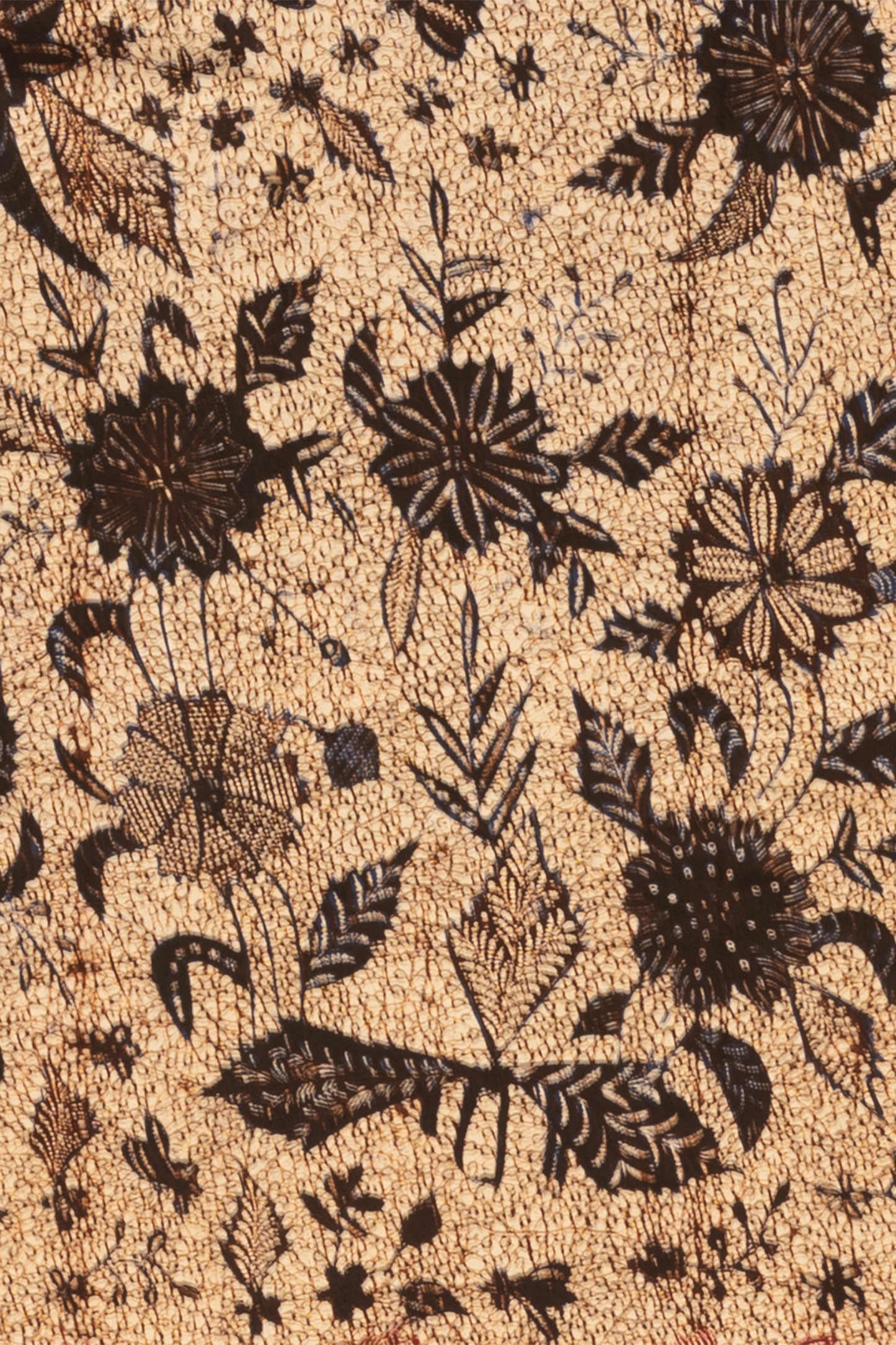
A testament to sixty years of artistic dedication, this intricate materos jarik cloth is abundant in symbolism and surprises.
There is a certain magic in the materos style: the background appears, from a distance, to be entirely plain. Only on close inspection is it revealed to be covered in an extraordinarily fine field of ukelan — tiny, spiralling vine-like curls drawn with the lightest possible stroke of the canting. This level of fine work is among the most technically demanding in Rifa’iyah batik, achievable only by artists with exceptional control and patience. Mbah Nuridah created this piece over a 12-month period.
The style takes its name from Mrs Matheron (née Willemse), a Dutch-descended batik merchant in Banyumas, Central Java, who inherited the workshop of her aunt, Mrs Catharina Carolina van Oosterom (1816–1900), one of the influential Dutch entrepreneurs who shaped Java’s north coast batik industry in the 19th century. Her batiks became so celebrated that the style was named after her — batik matheron or materos — characterised by fine, intricate vine-like fills, often on a light or apparently plain background. The style was copied in Pekalongan by the 1920s, and eventually reached Batang, where the Rifa’iyah community absorbed it and imbued it with their own Sufi spiritual meaning. The interconnected vines are seen as a symbol of the kinship ties and relationships through which prosperity flows.
The foreground features two magnificent pairs of burung merak (peacocks), rendered in the samaran style: their heads detached, their bodies, wings and extravagant tail plumage constructed entirely from long, majestic leaf forms, almost symmetrical but not quite. These careful deviations from perfect symmetry are intentional. In the Rifa’iyah tradition, the deliberate introduction of a stylised flaw is the artist’s act of deference to the true Creator — a quiet acknowledgement that only God may achieve perfection. The peacock itself carries rich symbolism across Javanese and Chinese-influenced coastal batik: beauty, grace, prosperity and good fortune; depicted as a pair, marriage and partnership. Elsewhere, smaller manuk samaran — abstracted birds — flutter through the design, never depicted whole, in keeping with the Sufi Islamic teaching that living creatures must not be shown in their entirety unless one can also grant them a soul.
*Mbah Nur accidentally made a stiny hole with her canting near along one edge of this piece and would like to apologise for her lapse in concentration.
Ibu Nuridah (Mbah Nur)
Learning batik as a young child, Mbah Nur has been practicing for more than 60 years. She loves creating batik, including free-form relawati motifs and the complex and intricate satria/materos styles.